

Key points in this blog:
Electronic logging devices (ELDs) are essential for hours-of-service compliance, but device approval alone does not guarantee data integrity across the connected ecosystem behind the log.
VicOne's CyberThreat Research Lab’s review of 17 Android ELD apps revealed recurring risks across mobile apps, cloud services, device communication, shared vendor technology, and user access controls.
Commercial fleet operators should look beyond the ELD dashboard: audit devices against current FMCA status, enforce account discipline, and cross-verify ELD records against supporting documents.
In May 2026, the US Federal Motor Carrier Safety Administration (FMCSA) removed 12 electronic logging devices (ELDs) from its registered list after determining that they did not meet federal technical requirements. Since January 2025, the agency has removed 79 devices for failing to meet standards meant to protect the technical integrity of the ELD program.
The concern extends well beyond device approval lists. Commercial Vehicle Safety Alliance (CVSA) Roadside Inspection Specialist Jeremy Disbrow said that new technologies have created different ways to manipulate logs, and that some less reputable ELD vendors may be part of the problem.
The real question for fleet operators is not whether an ELD is installed. It is whether the wider ELD ecosystem can preserve the integrity of the data.
VicOne's CyberThreat Research Lab reviewed 17 Android ELD apps to examine where data integrity risks can emerge across the connected vehicle ecosystem behind the log, from mobile apps and cloud services to device communication, shared technology, and user access. We also outline what commercial fleet operators can do to better evaluate, verify, and protect the ELD records they rely on.
What are ELDs?
Electronic logging devices, or ELDs, were introduced to make hours-of-service records more accurate, consistent, and easier to verify. Under FMCSA rules, an ELD synchronizes with a commercial motor vehicle’s engine to automatically record driving time and duty status, reducing the manual work and falsification risks associated with paper logbooks.
But once installed in a connected commercial vehicle, an ELD is not a standalone black box. It becomes part of an ecosystem of vehicle hardware, mobile apps, cloud services, vendor platforms, and user accounts. Each layer can affect the integrity of the log.
Weak app security, exposed backend services, poorly controlled vendor access, shared accounts, or improper edits made after the fact can all weaken trust in the final record.
Instead of changing a handwritten logbook, manipulation can now happen through the systems that generate, transmit, store, and certify electronic records.
For fleet managers, the key question is no longer only whether an ELD is installed. It is whether the wider ELD ecosystem can preserve the integrity of the data.
What the review of Android ELD apps revealed
VicOne’s CyberThreat Research Lab researchers tested the security of 17 Android ELD apps and reviewed public data on ELD manipulation. The goal was to look beyond the device itself and examine how weaknesses across apps, backend services, device communication, and vendor ecosystems can affect the reliability of electronic logs.
The review revealed several recurring areas of concern:
Apps and cloud weaknesses
Many ELD systems rely on mobile apps and backend services to collect, sync, and display driver and vehicle data. When these apps expose credentials or connect to poorly secured backend systems, the integrity of the records fleets depend on can be compromised.
Exposed credentials and backend access risks. The researchers found hardcoded security keys across the tested apps, including credentials linked to backend cloud storage such as Amazon S3. If these credentials are not properly restricted, they may expose backend systems or create opportunities for unauthorized access to data used by the ELD platform.
| Embedded Secret or Exposed Service | Severity | Apps Affected |
| AWS S3 Credentials | Critical | 6 |
| Firebase Realtime Database, public or no authentication | Critical | 1 |
| Third-Party device management credentials | Critical | 6 |
| ELD hardware SDK key | High | 8 |
| OTA update key | High | 5 |
| Third-party payment key | High | 2 |
| Third-party monitoring SDK key | High | 2 |
| Firebase API key | Medium | 4 |
| Google Maps API key | Medium | 4 |
| Firebase Realtime Database URL | Medium | 3 |
| reCAPTCHA / VAPID Key | Low | 1 |
Table 1. Embedded secrets and exposed services identified across 17 Android ELD apps
- Improper remote edits and overrides: Some reports also point to cases where back-office users or third-party “log editors” allegedly coordinate outside official fleet systems, including through encrypted messaging apps tomanipulate electronic records. These edits may include improper resets, corrections, or changes pushed through fleet software systems to make logs appear compliant.
Hardware and Bluetooth tampering
ELDs depend on accurate vehicle data and on the connectivity between the in-vehicle device, the mobile app, and the backend system. In many setups, that device-to-app link relies on Bluetooth. If this connection is weakly protected, users may have more opportunities to view, alter, or spoof data that affects the reliability of the log.
Odometer manipulation. In several of the tested Android apps, the researchers identified weaknesses that allowed users to view and modify ELD odometer values through the mobile app.
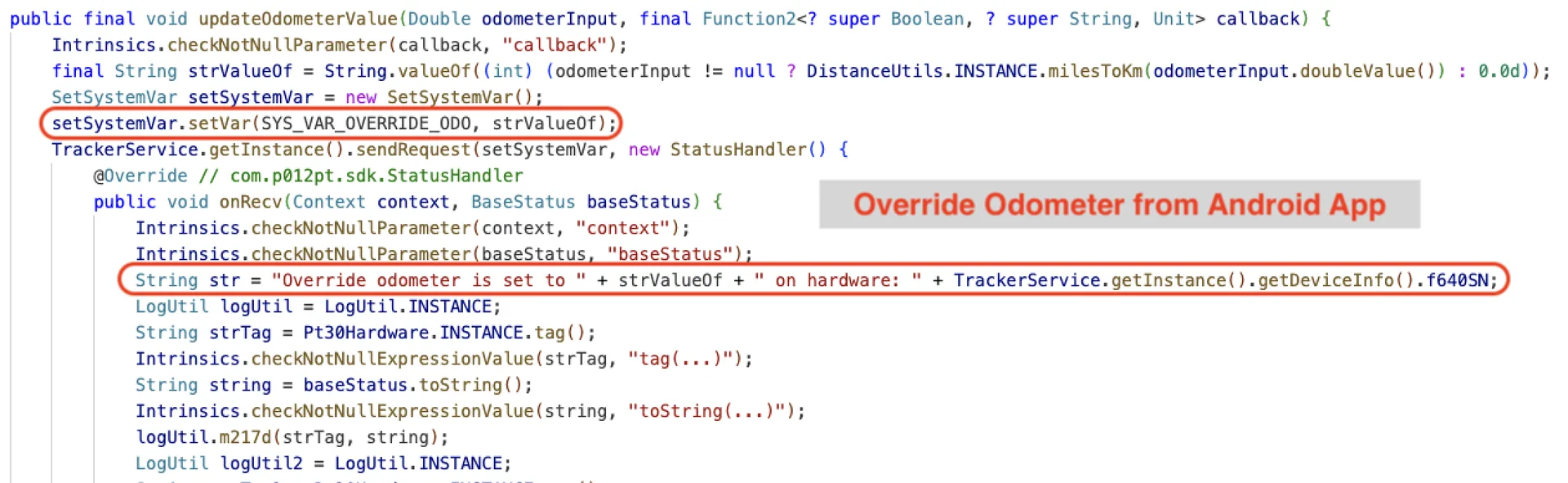
Figure 1. Editing ELD odometer values through an app
Engine status and speed forgery. If engine telemetry can be spoofed or misreported, a truck moving at 65 mph could appear in the ELD as “engine off” or “parked,” potentially keeping the driver in an off-duty status while the vehicle is still in motion.
Account and operational misuse
Some ELD manipulation does not require direct exploitation of the device or app. It can also happen through everyday access points and workflows that are difficult to monitor without strong controls.
Ghost drivers. A driver may log out of their primary profile and use another account to continue operating 24/7 while the original account appears to be resting.
Personal conveyance (PC) abuse. When loaded freight movement is intentionally misclassified as personal conveyance, it can make commercial driving appear personal, moving the trip outside normal hours-of-service oversight.
AI or software-assisted scrubbing. Reports suggest that some rogue operators may use AI tools, automation, or custom scripts to make false or improper logs appear more consistent, adjusting timeline gaps, matching fuel receipts to fabricated locations, and generating fake histories in real time.
Shared technology and supply chain risk
VicOne CyberThreat Research Lab found that several Android ELD apps were linked by shared technical components, including code, certificates, cloud architecture, SDKs, and backend dependencies. This points to a broader supplychain concern: devices sold under different names may still rely on much of the same underlying technology, much like ELD clones with different branding.
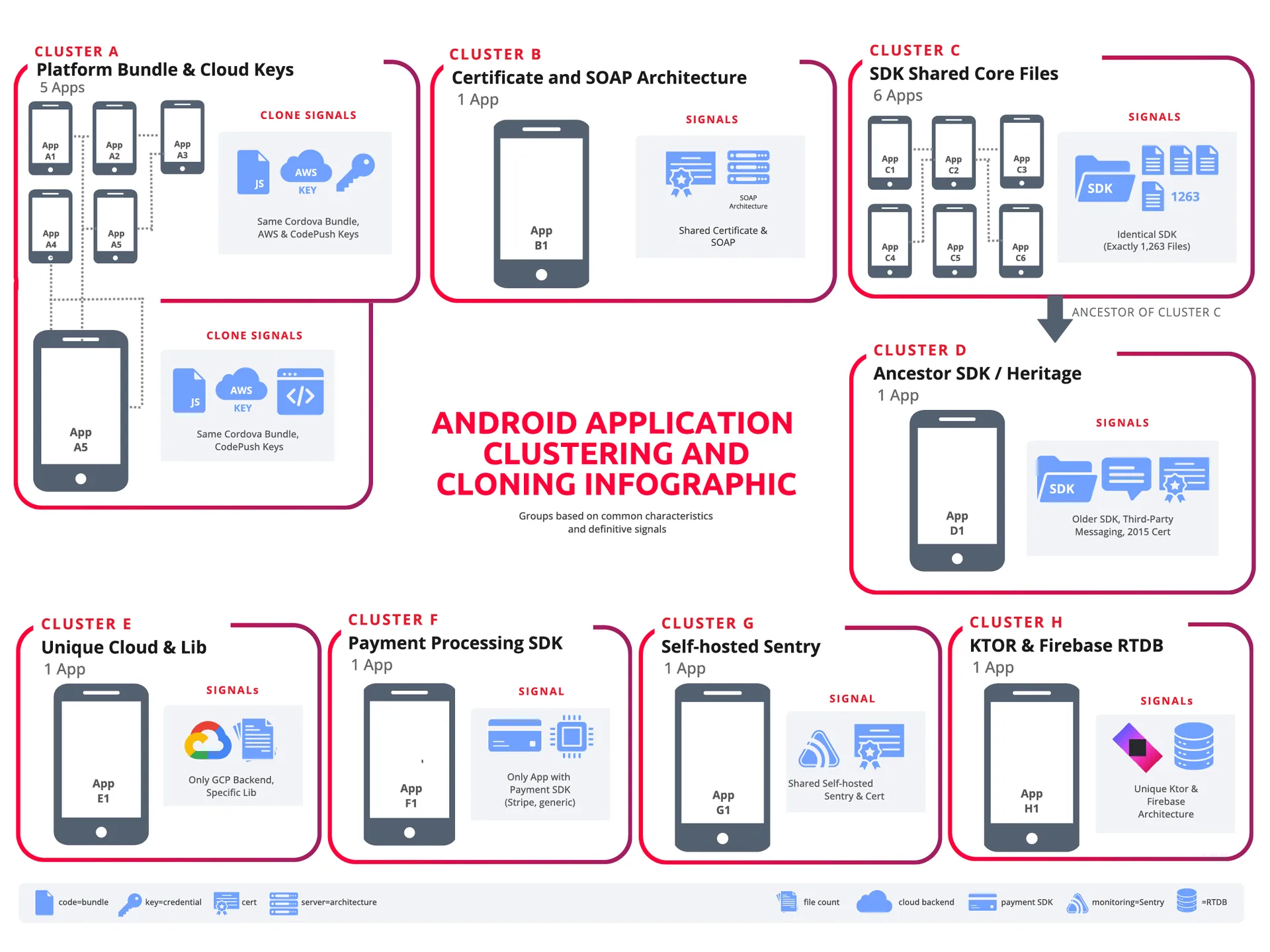
Figure 2. Clustering of 17 Android ELD apps based on shared technical components
One cluster used the same Cordova bundle and common AWS and CodePush keys, and another was built around an identical SDK core of 1,263 files. An older related app also appeared to use a legacy version of that same SDK family.
The groupings matter because a flaw may not remain isolated to a single app. If multiple products share the same codebase, credentials, SDK, or backend dependencies, one vulnerability could expose an entire family of related ELD apps.
Real-world ELD tampering cases
ELD manipulation and, in Europe, tachograph tampering show that digital driving-time records can still be altered, misused, or made harder to verify. Law enforcement actions, court filings, and roadside inspections show how these risks can appear in real-world operations.
In the United States, cases involving ELD log manipulation show how electronic records can be misused when back-office access and oversight are weak. In a federal case involving Extra Mile International, drivers alleged that dispatchers manipulated backend ELD systems to erase driving hours and make logs appear compliant. Reports have also described cases in which cloud-based ELD systems are allegedly altered by third parties or remote dispatch teams, raising concerns about unauthorized edits, falsified locations, or improper resets being pushed through software systems rather than made by the driver alone.
In Europe, tachograph enforcement cases show similar risks in digital driving-time systems. Polish authorities reportedly found a heavy truck traveling at 120 km/h (75 mph) despite a 90 km/h (56 mph) limiter, with tachograph data indicating interference. In Thessaloniki, Greece, a police operation reportedly uncovered hundreds of trucks with tampered tachographs, suggesting the role of illegal hardware, software, or service providers in altering driving records.
How commercial fleets can strengthen ELD data integrity
For commercial fleet operators, the ELD dashboard should not be treated as the only source of truth. If ELD data is altered through weak software, shared accounts, vendor access, or improper edits, the impact can show up in roadside inspections, audits, safety scores, and internal investigations.
To reduce that risk, fleets can focus on three practical controls:
Audit your devices. Do not assume that an ELD remains compliant simply because it was approved at the time of purchase. FMCSA can move devices from the registered list to the revoked list when they fail to meet technical requirements.
Check the revoked list. Regularly cross-reference your specific ELD hardware, app, and software versions against the official FMCSA registered and revoked ELD lists.
Plan replacements early. If a device is revoked, review the FMCSA guidance, replace it within the required transition period, and ensure affected vehicles are not dispatched with a noncompliant logging setup.
Enforce strict account discipline. ELD credentials should be treated as compliance-critical access. Shared logins, inactive accounts, and poorly controlled admin access can make it harder to verify who created, edited, or certified a record.
One driver, one account. Make sure every driver has a unique, verified account tied to their active commercial driver’s license (CDL).
Audit the trail. Review account activity for unusual patterns, such as unexplained timeline gaps, frequent unassigned driving miles, repeated edits, unexpected location changes, or activity from users who should no longer have access.
Verify logs against supporting documents. The ELD record should match the physical and operational trail left by the truck. Supporting documents can help confirm whether the electronic log reflects what actually happened on the road.
Cross-check data. Periodically compare a driver’s ELD timeline against fuel receipts, toll transponder logs, bills of lading (BOLs), scale tickets, dispatch records, GPS trails, and maintenance records.
Look for mismatches. Watch for records that show a vehicle as off duty while toll or fuel records show movement, locations that do not align with trip records, or edits that are not clearly explained.
Data integrity is the foundation of trustworthy ELDs
ELDs remain essential to how fleets manage hours-of-service records, but they should not be treated as set-it-and-forget-it systems. As ELDs become more connected to apps, cloud services, vendor platforms, and back-office workflows, the integrity of the data behind the log becomes just as important as the device itself.
One-time device checks are no longer enough. Automotive threat intelligence helps fleets understand cyber risks surrounding ELD data and the connected systems behind it. Threat intelligence platforms such as VicOne xAurient can help surface these risks earlier and provide the visibility needed to make more informed security and risk decisions.
For fleets, ELD data integrity should be part of a broader connected-vehicle security strategy — one that protects not only the ELD records but also the trust placed in the systems that produce them.