


Key points of this blog
- The FCC Covered List, European Cyber Resilience Act (CRA), and IEC 62443 represent three distinct gates to robotics market readiness: U.S. market access, EU lifecycle compliance, and industrial design assurance.
- The FCC action is already in effect. CRA reporting begins September 11, 2026. IEC 62443 timing depends on customer, contractual, or certification expectations.
- Shared product information, vulnerability management, and traceable security evidence can reduce fragmented work. VicOne CRA Studio connects these supporting workflows while each must still be assessed independently.
Robot manufacturers are entering a period in which cybersecurity increasingly determines not only how products are designed, but also whether they can enter key markets and meet customer expectations.
In the United States, the Federal Communications Commission (FCC) recently added certain foreign-produced advanced robotic devices to its Covered List, preventing covered equipment from receiving FCC equipment authorization unless it obtains conditional approval. In Europe, the Cyber Resilience Act (CRA) introduces legally binding cybersecurity requirements across the product lifecycle. Meanwhile, the IEC 62443 series of standards provides a widely recognized foundation for demonstrating the security of industrial automation and control systems.
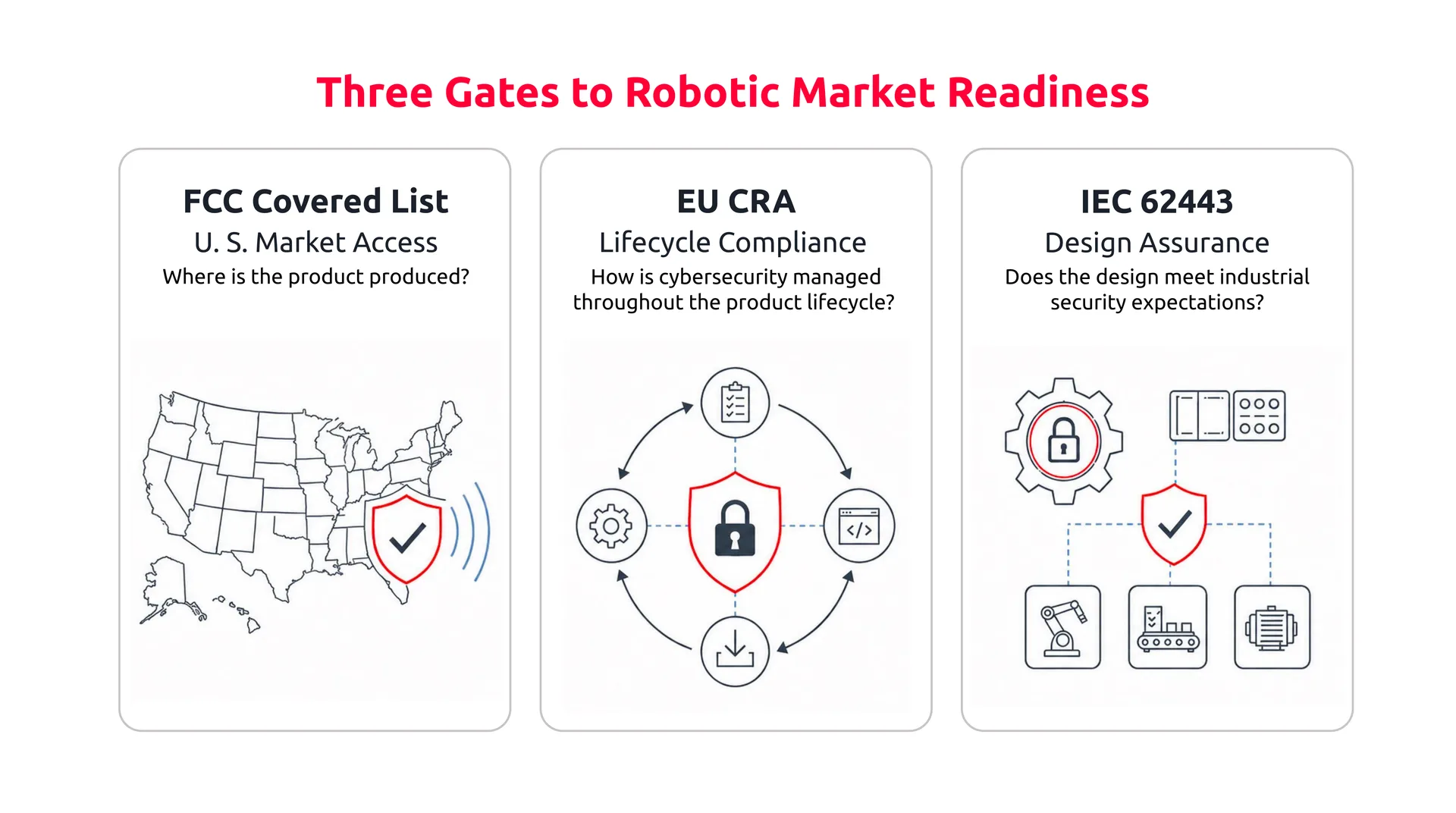
Figure 1. The applicability of each robotics market readiness gate depends on the product’s target market, scope, and deployment environment.
Together, the FCC Covered List, CRA, and IEC 62443 represent three distinct gates to market readiness. Each asks a different question: where a product comes from, how its cybersecurity is managed throughout its lifecycle, and whether its design meets industrial security expectations.
Three gates to robotics market readiness
The FCC Covered List, CRA, and IEC 62443 differ in authority, scope, and timing, but each requires manufacturers to demonstrate a clear understanding of their products and cybersecurity risks.
Gate 1: FCC Covered List and U.S. Market Access
On July 28, 2026, the FCC added foreign-produced advanced robotic devices to its Covered List, citing supply chain and cybersecurity risks. Covered equipment cannot receive FCC equipment authorization unless it has been granted conditional approval.
The FCC’s definition of “advanced robotic devices” covers devices that move on the ground, such as autonomous mobile robots, humanoid robots, and quadrupeds, that combine mobility with sensors, network connectivity, and controlling software. Fixed, stationary robots intended for industrial or medical use, including articulating, parallel/delta, Cartesian/gantry, and SCARA arms, are explicitly excluded, as are connected vehicles, rail vehicles, uncrewed aircraft, and uncrewed underwater vehicles.
What this means for robot manufacturers
Unlike earlier restrictions targeting named companies, the action applies to a category of equipment based on where it is produced. Manufacturers may need to:
- Determine whether their robots fall within the FCC’s definition of an advanced robotic device
- Establish how the product’s place of production affects its eligibility
- Assess whether conditional approval is needed before seeking U.S. market access
Why is this operationally difficult?
Product development, component sourcing, assembly, and testing may occur across different countries. This can make it difficult to establish a consistent view of where a robot is produced and which models may be affected.
Reliable product and supply chain information can help regulatory, engineering, and procurement teams assess eligibility before seeking FCC authorization.
Gate 2: EU Cyber Resilience Act (CRA) and Lifecycle Compliance
The CRA establishes cybersecurity requirements for hardware and software products with digital elements placed on the EU market.
What this means for robot manufacturers
The CRA is not a one-time certification. Connected robots within the CRA’s scope must be supported throughout their lifecycle. Manufacturers will need to:
- Build cybersecurity into product design and development from the start
- Maintain technical documentation, including a software bill of materials (SBOM)
- Monitor and address vulnerabilities during the support period
- Submit an early warning within 24 hours of becoming aware of an actively exploited vulnerability or severe security incident.
Key CRA timelines:
- September 11, 2026: Reporting obligations for actively exploited vulnerabilities and severe security incidents take effect. Manufacturers must submit an early warning within 24 hours of becoming aware of a reportable event, followed by a more detailed notification within 72 hours of becoming aware.
- December 11, 2027: Broader product cybersecurity requirements apply, including conformity assessment and technical documentation obligations.
These deadlines apply from the point the manufacturer becomes aware of a reportable event. They do not apply to every vulnerability discovered in a product.
Why is this operationally difficult?
CRA compliance does not end at product launch; it continues after a robot enters the market. Manufacturers need visibility into deployed products, software components, affected versions, and available mitigations throughout the support period.
When this information sits across separate engineering, security, and compliance systems, assessing a vulnerability and preparing the required documentation can consume valuable reporting and response time.
Gate 3: IEC 62443 and Design Assurance
The IEC 62443 series provides an internationally recognized framework for securing industrial automation and control systems. Although it is not legislation, it can serve as an important design assurance requirement for robots deployed in industrial environments.
What this means for robot manufacturers
Depending on the product and its role within an industrial system, manufacturers may need to demonstrate:
- A secure product development lifecycle
- Risk assessment and threat modeling practices
- Appropriate authentication, access control, and other technical safeguards
- Documented security decisions and vulnerability-handling processes
The operational challenge
IEC 62443 covers different participants and levels of an industrial system, from component suppliers to system integrators and asset owners. Manufacturers must determine which parts of the standards apply to their products and what evidence customers expect.
Some IEC 62443 practices may also support CRA readiness, particularly in secure development and vulnerability management. However, alignment with the standards does not automatically establish CRA compliance, so manufacturers still need to map shared evidence to each framework separately.
| FCC Covered List (Market Access) | CRA (Compliance) | IEC 62443 (Design Assurance) | |
| What is tracked | Product origin and authorization status | Vulnerabilities, patch deployments, and incident reports | Threat models, architectural decisions, and risk assessments |
| Team responsible | Regulatory + Supply Chain | Security + Compliance | Product Engineering + Architecture |
| Time Sensitivity | Pre-market equipment authorization | Lifecycle monitoring + 24-hour warning from awareness of a reportable event | Design phase through end-of-life |
| Key deliverable | Product origin records and conditional approval, if needed | SBOM, technical documentation, and incident notifications | Threat model, risk assessment, and design documentation |
| Verification method | FCC equipment authorization | Conformity assessment, vulnerability monitoring, and incident records | Security assessment or certification, where required |
Table 1. Comparison of the information, ownership, timing, deliverables, and verification methods associated with each gate
Although each gate presents a distinct operational challenge, manufacturers often rely on overlapping product information, security processes, and evidence to address them.
Different Requirements, Shared Cybersecurity Foundations
The regulatory and industry requirements across these three gates call for different evidence, but many of the underlying security processes overlap. When organizations manage these shared inputs through separate inventories, tools, and documentation flows, they can duplicate work and increase the cost and complexity of addressing these requirements.
- Product and component visibility. Different teams may maintain separate product, component, and production records. Inconsistent information can make it harder to assess market eligibility, identify affected products, and prepare supporting evidence.
- Limited vulnerability context. Public vulnerability data may not show whether vulnerable code is present, reachable, or actively exploited in a specific product. Product context helps teams distinguish actual risks from findings that require no immediate action.
- Disconnected documentation. Product records, risk assessments, vulnerability findings, and remediation activities are often documented separately. Connecting this evidence reduces repeated work and creates clearer traceability for regulators, assessors, and customers.
- Siloed responsibilities. A sourcing, design, or software change may affect several teams. Shared records and coordinated workflows help supply chain, engineering, security, compliance, and legal teams respond using consistent information.
Managing these challenges efficiently requires connected workflows that allow teams to reuse consistent evidence without treating the requirements as interchangeable.
One Platform for Multiple Cybersecurity Requirements?
Many solutions focus on one area, such as supply chain visibility, vulnerability scanning, or security assessment. VicOne CRA Studio brings these capabilities together in a unified platform that automates and supports parts of the CRA compliance workload, including SBOM management and supply chain risk management. It supports a four-step workflow spanning product intake, security assessment, continuous monitoring, and compliance documentation.
Step 1: Input product information
Robot manufacturers can upload firmware, SBOMs, design documents, and documentation from existing assessments or certifications aligned with IEC 62443, ISO/SAE 21434, EN 303 645, and EN 18031-1. CRA Studio brings this information into a shared product record and maps relevant evidence to CRA clauses, reducing the need to recreate documentation across separate workflows.
Step 2: Assess product security
Firmware and SBOM analyses bring three complementary views together:
- Supply chain visibility: Identify software components and dependencies across the product.
- Lifecycle compliance: Continuously monitor known, zero-day, and undisclosed vulnerabilities.
- Support for design assurance activities: Connect threat modeling, attack path analysis, and risk prioritization to the product architecture.
Step 3: Monitor and respond
CRA Studio continuously monitors shipped products and helps teams:
- 24-hour reporting support: Support the assessment, prioritization, and documentation needed for an early warning within 24 hours of the manufacturer becoming aware of a reportable event.
- Mitigation recommendations: Provide contextual guidance based on the product architecture and identified attack paths.
- Multi-product tracking: Show the cascading impact when a vulnerability affects multiple SKUs across the product portfolio.
Step 4: Draft compliance documentation and organize supporting evidence
CRA Studio helps organize relevant evidence, including risk assessments, threat models, SBOMs, existing certifications, vulnerability findings, and remediation activities, and maps applicable information to CRA clauses.
One-click report generation helps teams prepare documentation for regulators, customers, assessors, and internal stakeholders. End-to-end traceability connects each finding to the relevant product information, security decision, assessment, and remediation activity.
Japan Radio reduces vulnerability assessment workload by 70%–80%
Japan Radio Co., Ltd. (formerly JRC Mobility) adopted VicOne xZETA, an SBOM and vulnerability management system, to support compliance with the European Radio Equipment Directive and EN 18031. Automated SBOM generation and vulnerability management reduced its assessment workload by an estimated 70%–80% while strengthening its foundation for the CRA.
“Security by design will become a fundamental principle across all products we develop, rather than a requirement limited to specific markets.”
— Japan Radio Co., Ltd.
Read the JRC Mobility case study.
Build Readiness Beyond a Single Requirement
Market-access rules, cybersecurity regulations, and customer expectations will continue to evolve across regions and industries. Robot manufacturers that maintain reliable product records, clear ownership, and traceable security decisions can adapt without rebuilding their processes for every new market, standard, or customer assessment.
Long-term readiness depends not only on meeting today’s requirements, but also on establishing a repeatable way to determine applicability, assess risk, coordinate action, and demonstrate what was done.
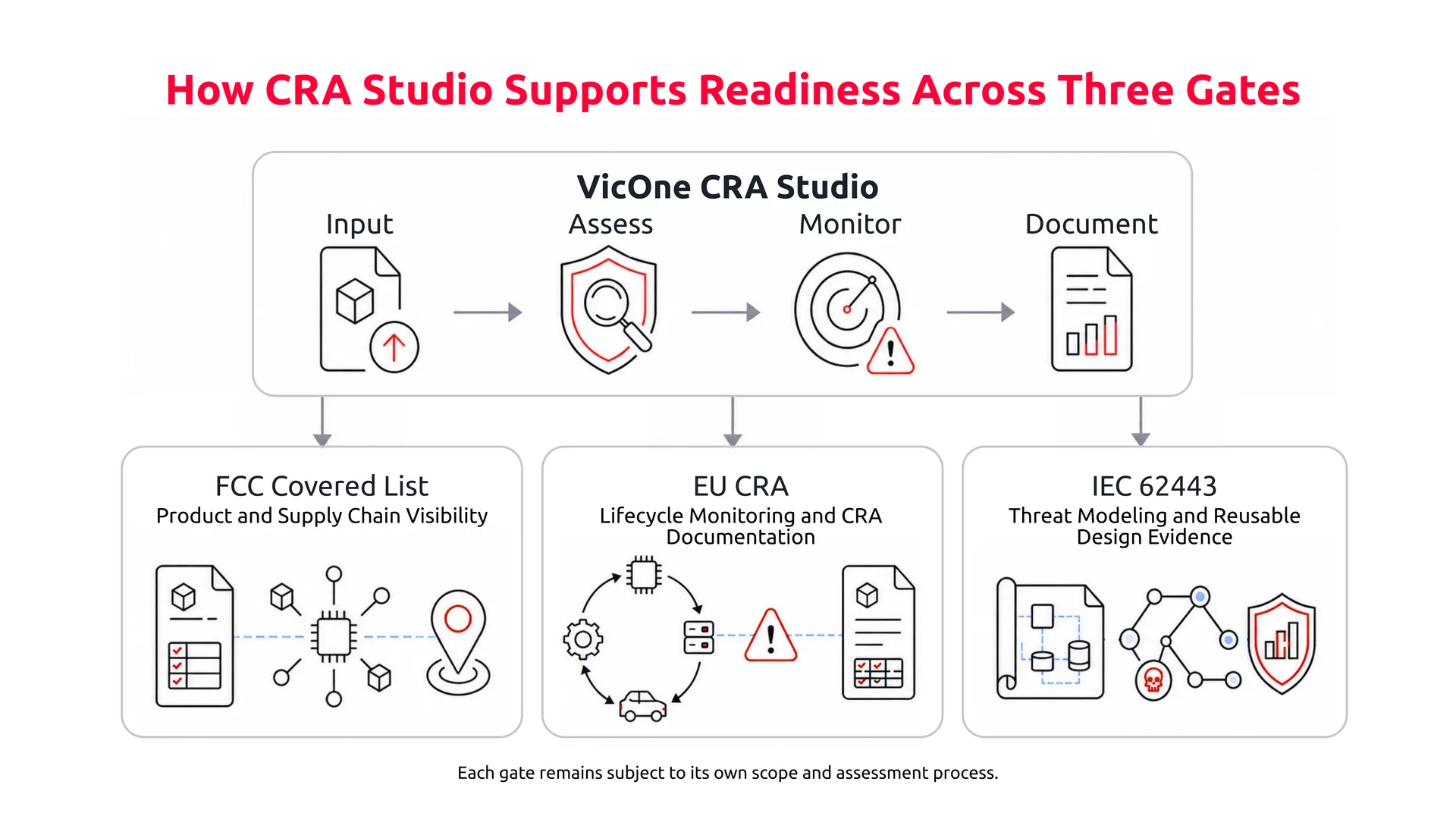
Figure 2. VicOne CRA Studio connects shared product security workflows and evidence while allowing each requirement to be addressed independently.
VicOne CRA Studio provides a practical foundation for this coordinated approach. In a 30-minute CRA Studio assessment, VicOne analyzes firmware or an SBOM to identify affected components and prioritize relevant risks. Robot manufacturers receive a clear view of their product security exposure rather than a generic sales presentation.
Book your 30-minute CRA Studio assessment today!
---
Frequently Asked Questions About the FCC Covered List, CRA, and IEC 62443
We already have an IEC 62443 assessment. Does that cover CRA?
Not entirely, but it may provide reusable evidence for secure development, risk assessment, and technical controls. The CRA also introduces lifecycle obligations, including continuous vulnerability handling, security updates, technical documentation, and reporting for actively exploited vulnerabilities and severe security incidents. VicOne CRA Studio can map relevant evidence from an existing IEC 62443 assessment to CRA clauses, helping teams identify remaining gaps.
How does supply chain visibility (FCC) connect to vulnerability monitoring (CRA)?
The connection is indirect. The FCC action focuses on where an advanced robotic device is produced and whether it can receive equipment authorization, while the CRA focuses on product cybersecurity throughout its lifecycle. A shared product record can support both by helping teams establish product origin and identify which models and components are affected by a vulnerability.
Our engineers are already stretched. How do we take on three regulatory and industry requirements?
Manufacturers can reuse product information and automate activities such as SBOM generation, vulnerability monitoring, risk prioritization, and documentation. This does not remove the need for engineering judgment or separate assessments, but it can reduce repetitive work.
What’s the timeline for compliance?
The FCC Covered List action is already in effect. CRA reporting obligations begin Sept. 11, 2026, followed by the main requirements on Dec. 11, 2027. IEC 62443 has no single regulatory deadline; its timing depends on customer, contractual, or certification requirements.
Does VicOne’s automotive expertise apply to non-automotive robotics?
Yes. Connected robots and vehicles share security challenges involving embedded software, network connectivity, software updates, third-party components, and potential effects on physical operations. VicOne’s threat modeling, vulnerability intelligence, SBOM management, and lifecycle monitoring capabilities can therefore support robotics, although assessments must still reflect each product’s architecture, operating environment, and applicable requirements.
This article was updated on Aug. 28, 2026, at 2:00 p.m. UTC to clarify certain FCC and CRA requirements, refine descriptions of VicOne CRA Studio’s capabilities, and reflect current company information.