
EV Charging System Protection
Secure Your EV Charging Systems by Monitoring for
Software Vulnerabilities and Ensuring Attack Resilience
EV Charger Risks: Battling Service Outage
EV charger–related cases accounted for 8% of automotive security incidents that occurred between mid-2022 and mid-2023.* Such cases could lead to service and grid disruptions, which is why certain countries have established cybersecurity standards and regulations for EV charging systems, such as NIST IR 8473 and ETSI EN 303 645.
Our solutions provide robust cybersecurity to ensure continuous operation of electric vehicle supply equipment (EVSE) or charging systems. Going beyond Secure by Design, VicOne's EV Charging System Protection continuously identifies and mitigates vulnerabilities, safeguarding charging stations from unknown risks throughout their life spans.
*Source: VicOne Automotive Cyberthreat Landscape Report 2023
Timely Detection of and Response to Security Risks and Cyberattacks
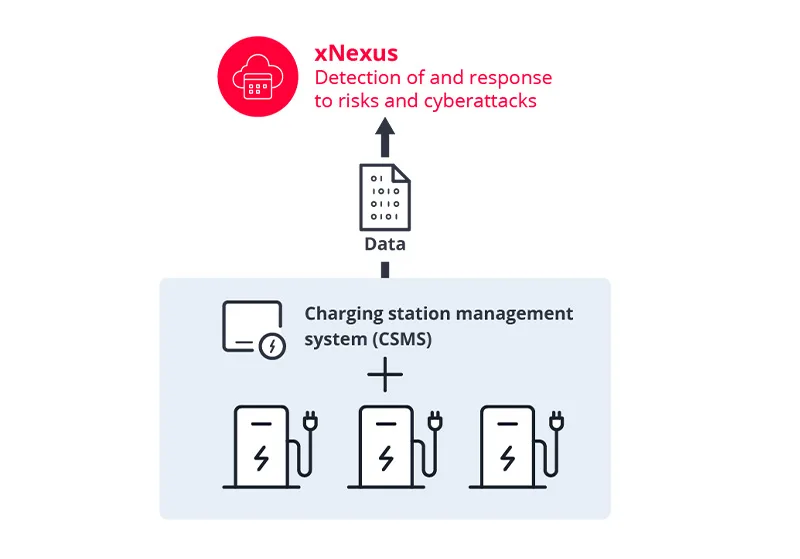
Non-Intrusive Integration
Our intrusion-free cloud-based XDR platform, xNexus, enables timely detection of and response to security risks and cyberattacks, without requiring hardware changes. Combining human-led investigation and GenAI-assisted analysis across day-to-day activities, our solutions provide early risk warnings, safeguarding charging stations from risks throughout their life spans.
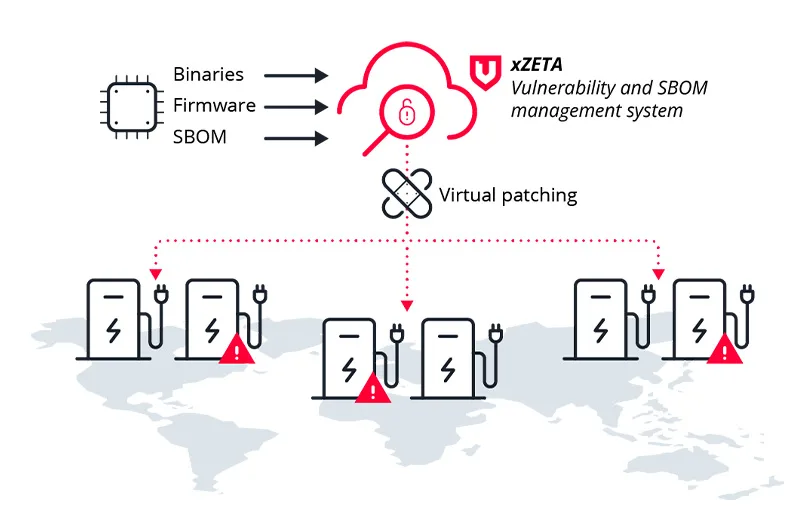
Unique Zero-Day Insights
As EVSE cyberthreats continue to evolve, it is crucial to maintain continuous monitoring for vulnerabilities and malicious objects, such as zero-day vulnerabilities, advanced persistent threats (APTs) and ransomware.* Our solutions allow you to do just that on the binaries, firmware, or software bill of materials (SBOM) of your EV chargers. Upon detection of a vulnerability, our solutions implement virtual patching* in conjunction with the security agent at the edge to prevent exploitation. This approach enables you to protect your systems without having to make changes, providing an average of 102 days of protection while waiting for a vendor patch.
*Patent pending
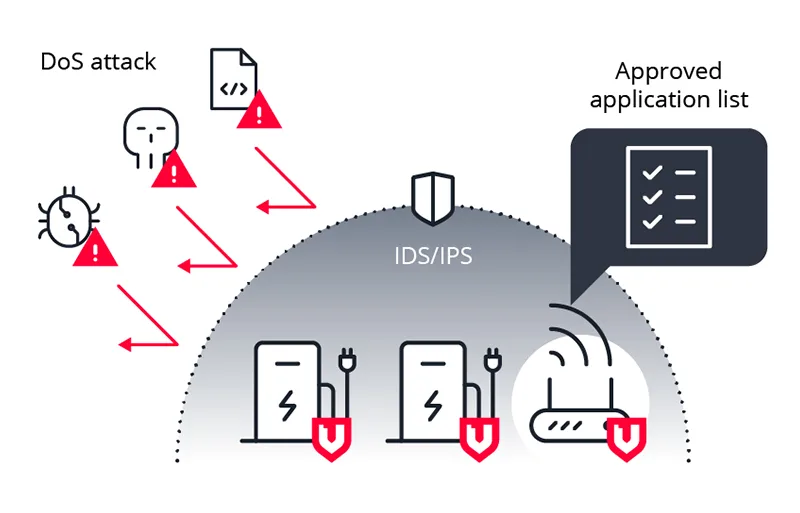
Resistance to Cyberattacks
Our solutions work to your advantage even if your EV charging systems are already in operation. By integrating our software-based security agent into your charging points or controllers in advance, your EV charging systems gain the ability for immediate detection and blocking of attacks, including denial-of-service (DoS) attacks. It also implements virtual patching* to prevent exploits by enforcing multiple layers of security policies and rules. Moreover, it blocks unauthorized applications from running on chargers by validating them through an approved application list.
*Patent pending
Award-Winning, Complete EV Charging System Protection


Our partnership with VicOne will enable our customers to comply with the highest standards of international regulations and quickly deploy safe and efficient charging infrastructure.


Know More From Our Resources
GAIN INSIGHTS INTO AUTOMOTIVE CYBERSECURITY
Sony Patches Seven XAV-9500ES Flaws That Could Have Enabled Device Compromise
Sony patched seven XAV-9500ES vulnerabilities affecting Wi-Fi, Bluetooth, and USB. VicOne examines the attack paths, potential impact, and next steps.
READ MORE →
Why Cybersecurity Is Essential to Safety Assurance for Physical AI
Physical AI can become unsafe even without experiencing conventional failures. Safety assurance must account for cyber manipulation of the inputs, models, commands, and systems that shape robot behavior.
READ MORE →
AI Agents Can Shape the Physical World. We Can Secure Their Actions.
VicOne supports NVIDIA's Open Agent Safety Platform, extending the focus from secure AI agent decisions to the real-world actions of vehicles and robots.
READ MORE →
Looking Beyond the Mythos Era: If AI Can Read Firmware, What Does Protection Mean Now?
Part 2 of 2: AI-driven binary analysis is forcing a rethink of automotive firmware protection. Part 1 covered how AI shortens PoC-to-exploit timelines.
READ MORE →